For leaders who treat “unplugging” as a liability, not a reward.
You don’t need a holiday. You need a different room to think in.
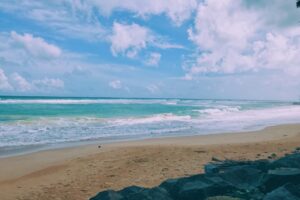
Sri Lanka’s south coast has spent the last two years quietly turning a surf pilgrimage into a serious remote-work base. The infrastructure is young. It’s moving fast. And as of this year, it’s finally legal to build a life around.
The Wi-Fi verdict
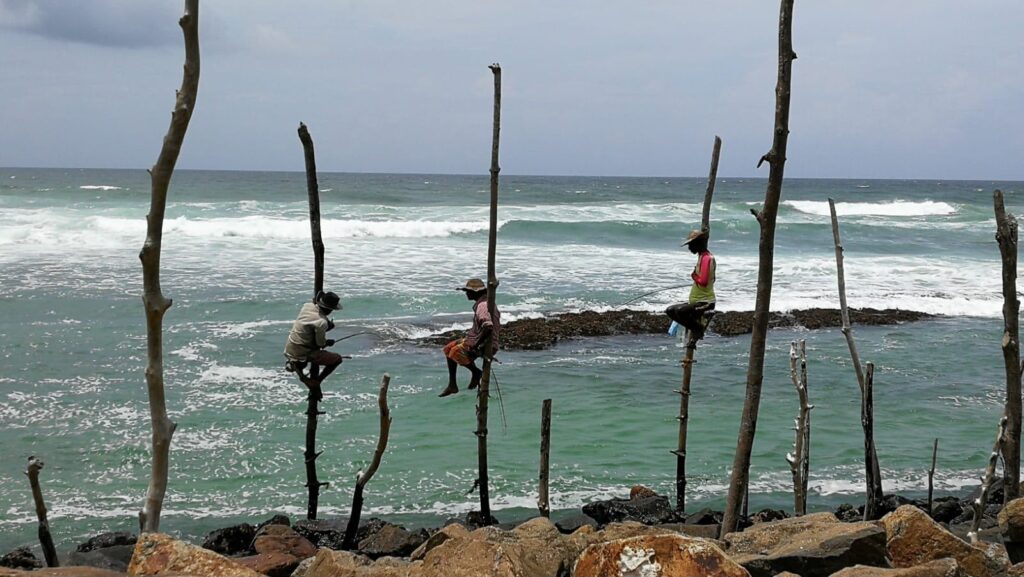
Sri Lanka is not a top-tier connectivity market. It ranks 131st globally for fixed broadband speed. If your week runs on heavy file transfers and back-to-back video calls, let that number temper your expectations.
But inside the nomad corridor, the picture changes. Weligama and Galle now have fibre in coworking spaces and upscale hotels. Outpost Weligama, the Bali-born brand’s first Sri Lanka location, runs SLT fibre-optic Wi-Fi, standing desks, international plug points and private phone booths for video calls. Plan B, a coworking café in Weligama, advertises speeds up to 600 Mbps, with air-conditioning and ergonomic seating built for full workdays. In Ahangama, Colive pairs a coworking space with a pool, garden, bar and restaurant. Every private room comes with its own desk.
The honest caveat: independent tracking puts average residential broadband in Weligama at 21 Mbps. Mediocre by any nomad-hub standard.
My rule: work from the coworking space. Never from the guesthouse Wi-Fi.
The power question. Answer it before you book.
Most travel coverage skips this. It’s the detail that decides whether you make your 9 a.m. Zurich call.
Power cuts still happen in Sri Lanka. Urban areas see occasional outages; outstation areas face more frequent disruption. Backup generators are not guaranteed at smaller guesthouses or private rentals. The coworking operators have priced this risk in. Outpost’s setup includes generator backup.
Booking independent accommodation? Generator backup is a filter, not a nice-to-have. And carry a mobile hotspot or eSIM. Every credible 2026 nomad guide lands on the same workaround: it’s a mandatory backup, not a convenience.
The legal layer: this just became a real option
Until this year, working from Sri Lanka meant operating in a grey zone on a tourist visa. That has changed.
Sri Lanka now offers an official Digital Nomad Visa: a residence category for foreign professionals working remotely for employers or clients based outside the country. It grants legal residence for up to a year, renewable annually. The government has since lowered the income threshold to $1,500 a month and introduced a five-year option, one of the longest-duration nomad visas in Asia. It comes with no local tax on foreign income and no minimum annual stay requirement.
For a founder testing a season abroad before committing further, that’s a materially lower-risk entry point than most Southeast Asian equivalents.
What it does to your leadership
Where you think is a decision, not a backdrop. And Weligama tests that decision harder than a serviced office in Singapore ever would.
There is no assistant fielding your calendar here. No floor of colleagues to absorb the friction of a bad night’s sleep. The discipline has to be yours. A dawn session in the water. Then a closed laptop lid until the work is actually done. Not performative “working from paradise” content in between.
That constraint is the point. Leaders who can hold structure in a low-structure environment, who set the boundary between recovery and output themselves, tend to return sharper, not softer. It’s the same instinct that separates founders who use travel as a genuine reset from those who use it as an escape and come back further behind.
A small tell: book the coworking desk before the beach umbrella.
One practical note. The time zone works in favour of Europe and the Middle East, and against the West Coast. Map it before you commit a quarter’s worth of stand-ups to a 5:30 a.m. call.
Why this one earns its spot
Most destinations sell connectivity as the pitch. Weligama sells something rarer: a work session that ends with 6 a.m. in the water instead of a scroll through a feed.
Ahangama’s beach isn’t swimmable. That is precisely why Colive built a pool around it. A small, telling detail about how deliberately this stretch of coast has been built for people who work first and surf second, not the other way around.